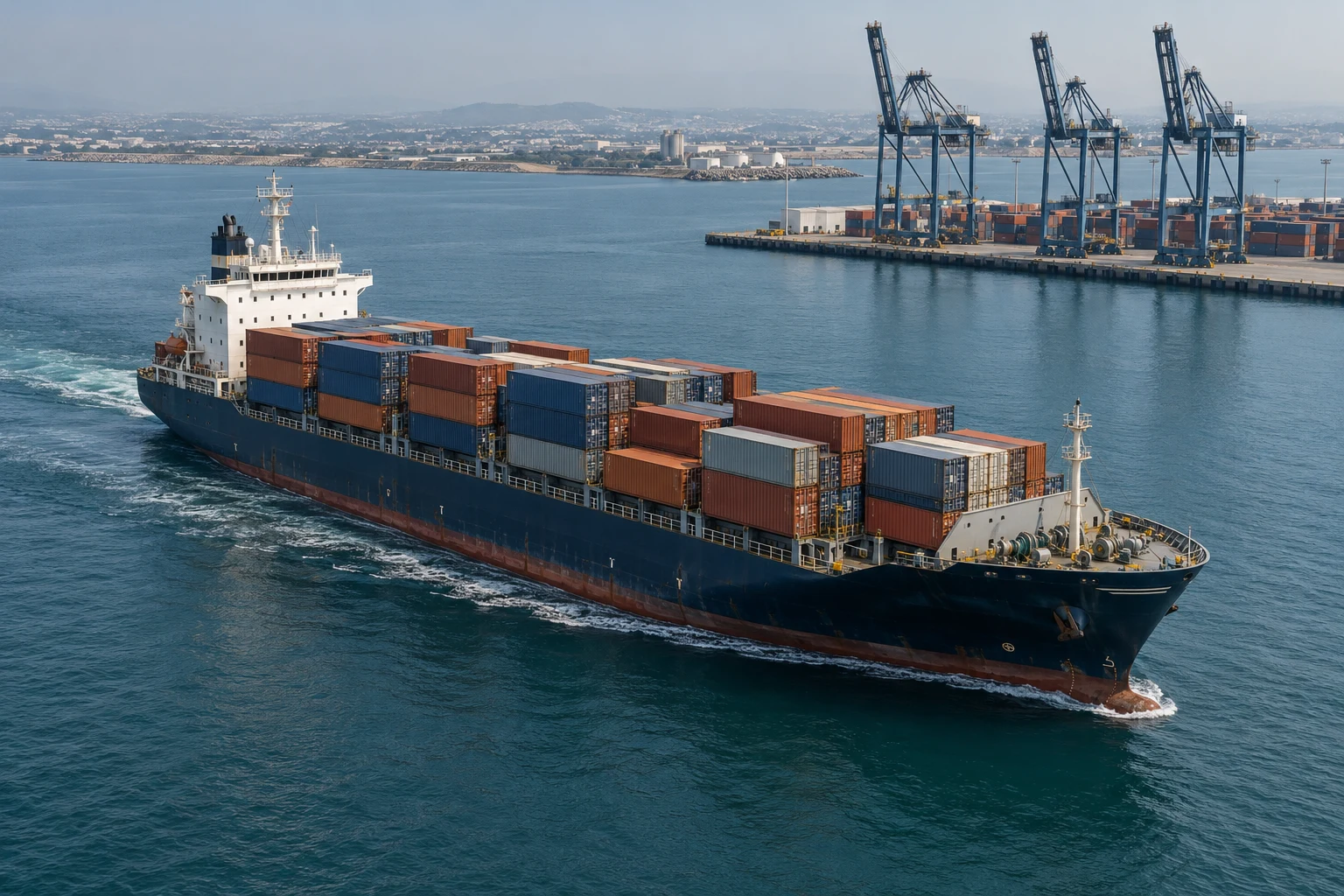
Ocean transport scope
The ocean leg is quoted between agreed ports. Supplier collection, export operations, customs coordination and consignee delivery are included according to the selected scope. Handover points and included services are identified before booking.
Origin
Container acceptance, documents and port handover.
Ocean leg
Transport using the confirmed service.
Arrival
Release documentation and port operations.
Onward delivery
Collection and delivery to the agreed address.
Ocean shipments can use full-container (FCL) or less-than-container-load (LCL) services. Compare FCL and LCL · Container types and dimensions.
Service selection and transit time
Transit estimates apply to defined stages. ETD and ETA are planned departure and arrival dates; they do not mean clearance or warehouse delivery is complete. The proposal confirms the service, possible transshipment and timing boundaries.
Ocean freight and port charges
Ocean rates do not have a universal service scope. The quotation specifies included operations, separate charges, currency, validity and cargo assumptions. An archived route offer is a historical reference only.
| Item | Quotation scope |
|---|---|
| Ocean freight | Ports, equipment, selected service and applicable surcharges. |
| Terminal handling | Origin and destination operations, including THC and local-charge scope. |
| Carrier documentation | Transport documents, release procedures and collection conditions. |
| Onward transport | Road or rail transport after arrival, where required. |
| Clearance and payments | Agreed customs-stage services and separate statutory payments. |
| Storage and equipment | Storage, container-use terms and empty-container return. |
Cargo release and equipment return
Before departure, we agree release procedures, document readiness, collection and consignee receiving conditions. For FCL, we clarify equipment-return locations and deadlines; for LCL, we clarify consignment release from the deconsolidation warehouse.
Free time
An agreed period before specified equipment charges apply. Its length and starting event depend on the service.
Demurrage / detention
Equipment-use conditions inside and outside the terminal. Periods may be separate or combined.
Storage
Terminal or warehouse storage. Rates and free periods are checked separately from equipment-use terms.
The carrier and terminal terms determine the actual charging arrangements. We check applicable periods, tariffs and return locations when preparing the quotation.
Bill of lading and cargo release
Before shipment, we check the draft bill of lading: shipper, consignee, notify party, cargo description, package count, weight, ports, container and seal numbers. Details are checked against the invoice, packing list and shipping instructions.
The document and release method are agreed in advance: original bills of lading, telex release following surrender of originals under the carrier’s procedure, or a sea waybill. These are distinct arrangements; a scanned bill alone does not confirm cargo release. Where House and Master bills apply, release arrangements for both are coordinated.
Container seals and handover checks
After stuffing, the container is sealed and the seal number is recorded in shipping instructions and transport documents. Handover checks cover the number, seal integrity and visible container condition. The carrier and route requirements determine the seal type.
Inspection openings and seal replacements must be documented with the previous and new numbers. Damage or number discrepancies should be recorded and photographed, with the responsible parties notified; insured shipments also require notification under the policy procedure. A seal does not certify the quantity or condition of the contents.
Cargo insurance
Cargo insurance is agreed separately. Carrier liability and cargo insurance have different conditions and compensation limits. Before shipment, the sum insured, covered risks, deductible, coverage start and end, and inclusion of transshipment and intermediate storage are clarified.
The premium is calculated from the agreed sum insured using the insurer’s rate. It depends on the goods, packaging, route, transport modes, transshipment and coverage. Cargo description, documented value and delivery terms are required for a quotation. All-risks cover also has exclusions; final terms and price are subject to the insurer’s offer.
Quotation and booking information
The following information supports an ocean freight quotation:
- Origin and destination ports, or addresses for warehouse collection and delivery.
- FCL or LCL, container type and count, or LCL consignment specifications.
- Product name, package count, weight, volume, packaging and dimensions.
- Cargo readiness and the handover point agreed with the supplier.
- Special conditions such as temperature control, out-of-gauge dimensions or dangerous-goods properties.
The invoice and packing list help clarify shipment details. Contact information is sufficient for the initial enquiry; outstanding specifications will be requested when preparing the proposal.
Ocean freight questions
Is a direct service always the better option?
We compare the agreed overall delivery scope, not just ocean freight: terminal operations, timing, equipment and onward transport. The appropriate option depends on the shipment.
Does ocean freight include all port charges?
No. Inclusions depend on the quotation. Ocean freight, terminal handling, documentation and additional services are identified separately.
Can onward delivery be included?
Yes. Provide the final address or terminal, cargo details and unloading conditions. The inland leg is included in the agreed service scope.
What does a transit estimate ending at port arrival cover?
It ends at arrival in the destination port. It does not include completed customs clearance, container release or consignee delivery unless those stages are separately specified.